Telvonic SYSTEMS
When renting usually wins
- New product introduction. EVT, DVT and PVT builds need test capacity for weeks, not years.
- Launch peaks and seasonal volume. Extra stations for a few months, then hand them back.
- Short or uncertain programmes, such as EMS contracts with no guaranteed renewal.
- Technology transitions. Moving from Wi-Fi 6 to Wi-Fi 7, or GPON to XGS-PON, can make a newly bought tester obsolete sooner than planned.
- Waiting for capital approval. Start production now instead of after the budget cycle.
- Evaluation. Prove a station on your own product before committing to buy.
When buying usually wins
- Steady volume for several years, with the equipment in use most of the time
- General-purpose instruments you'll reuse across many products
- Long programmes where total rent would clearly exceed the cost of owning
A simple break-even check
Compare the full cost of owning with the rent for the period you actually need the equipment.
Cost of owning = purchase price + calibration + maintenance + cost of capital − resale value
Break-even (months) ≈ cost of owning ÷ monthly rent
Break-even (months) ≈ cost of owning ÷ monthly rent
Illustrative example. A station costs 100 units to buy. Calibration, maintenance and capital add 15 units over three years, and it would resell for 35 at the end, so owning costs 80 units. At a rent of 5 units a month, break-even is 16 months. Need it for six months? Rent. For three years at high utilisation? Buy. These are example figures only — use real quotes for your decision.
Costs that are easy to miss
- Idle time between programmes, when owned equipment earns nothing
- Calibration downtime and the cost of spare units to cover it
- Obsolescence as standards move on
- Import lead times and duties on new equipment
- Engineering time to integrate a new instrument into your line
- Storage and floor space
Rent-to-own: the middle path
Rent-to-own lets you start production on rented equipment and convert part of the rent paid into a purchase once volumes are proven. It suits new products with uncertain demand: you avoid the up-front spend without paying full rent for years.
What to check in a rental agreement
- Calibration certificates on delivery, from an accredited lab if your quality system requires it
- Software options and licences included — not just the base instrument
- Delivery time to your site, and who installs and configures it
- Repair or swap-out time if a unit fails during the rental
- Insurance, damage and loss terms
- Minimum period, extension and early-return terms
- Data wiping when equipment is returned
- For complete stations: fixtures, cabling, test software and MES integration included
How Telvonic helps
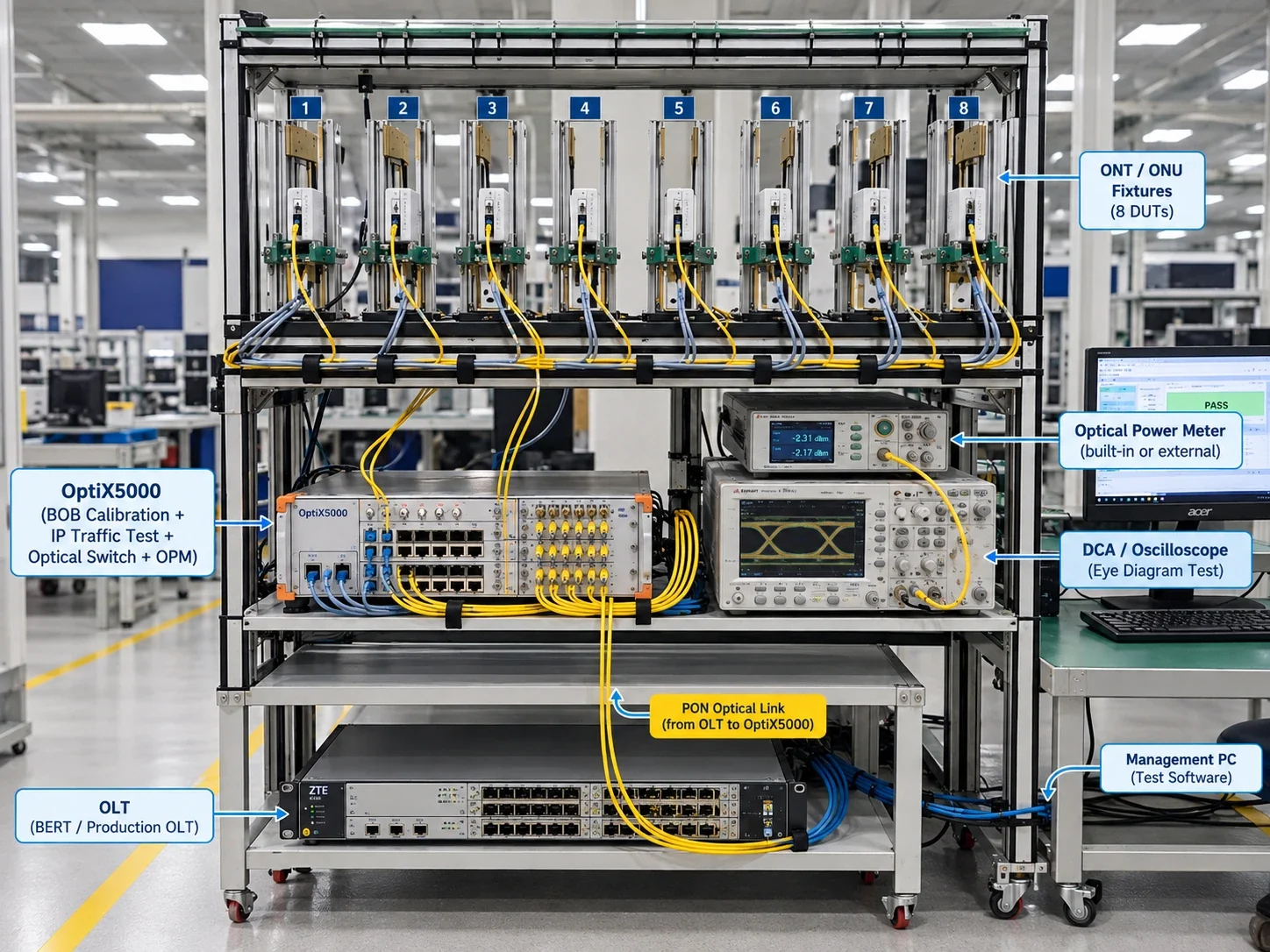
We rent individual testers, shield boxes and complete ready-to-run stations — including our 8-DUT Wi-Fi calibration station and 16-DUT PON / ONT station — across India, with short-term, project and rent-to-own plans.